
Written by the Level Up Limo Team
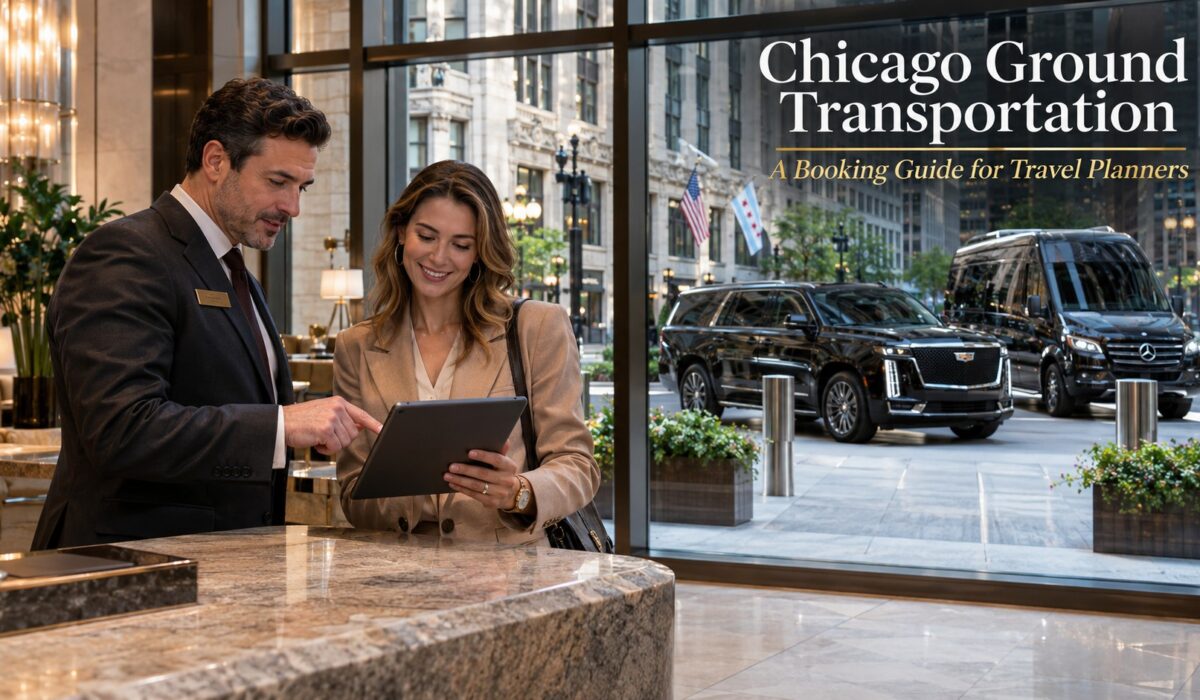
Chicago ground transportation for planners begins long before a chauffeur arrives outside a hotel. A concierge arranging an airport pickup for an international guest, a travel agent coordinating several arriving executives, and an event planner moving a conference group to dinner all need accurate reservations. The challenge is not simply choosing a luxury vehicle. It is ensuring that every passenger, pickup location, schedule and special requirement reaches the transportation provider before the journey begins.
This guide explains how hospitality professionals, travel advisors, executive assistants and event organizers can request chauffeured transportation throughout Chicago and its suburbs. It covers booking responsibilities, airport arrivals, vehicle selection, itinerary changes and guest communication. For visitors requiring reliable Chicago limo service, the most useful arrangement is one built around the actual traveler rather than an incomplete reservation request.
Quick Answer
Concierges, travel agents and event planners should provide the passenger’s name, reachable mobile number, exact pickup and destination addresses, flight or event details, vehicle requirements and requested service times. For groups, include the full passenger count, luggage, accessibility needs and any scheduled intermediate stops. Confirm the written quote, airport meeting instructions, payment responsibility and procedures for changes before travel. Professional reservations become easier when one designated organizer manages updates and shares the final itinerary with everyone involved.
Need to coordinate a guest arrival or group itinerary? Call (866) 666-0112 or request a chauffeured reservation. For several coordinated bookings, describe the complete project so the reservations team can discuss an appropriate service arrangement.
Chicago Ground Transportation for Planners: Seven Essential Booking Decisions
Professional transportation planning involves more than a departure time and vehicle preference. A passenger may be arriving from overseas, traveling directly to a meeting or attending an event with several scheduled movements. The person making the reservation may never meet the chauffeur or ride in the vehicle.
Seven decisions help prevent avoidable misunderstandings:
- Identify who is making and approving the reservation.
- Confirm the actual passenger and contact information.
- Match the vehicle to the people and luggage.
- Specify accurate airport, hotel and venue pickup locations.
- Distinguish direct transfers from retained chauffeur service.
- Confirm payment, waiting and change conditions.
- Establish one communication process for the travel day.
These decisions are particularly useful when several people participate in the same booking. An executive assistant may request the vehicle, an accounting department may handle payment and a visiting client may be the only passenger. Each person has a different responsibility, and the confirmation should make those responsibilities clear.
1. Identify the Organizer, Passenger and Payment Contact
A common booking problem begins when the person arranging transportation assumes that everyone else has the same information. A hotel concierge may make a reservation using the property’s main telephone number, but that number may not help a chauffeur reach a guest who has just landed at O’Hare.
Every reservation should distinguish the organizer, the passenger and the person responsible for payment. When one person fills multiple roles, that is straightforward. When the roles belong to different people, their contact details need to be accurate and their responsibilities agreed.
The organizer should remain available to authorize meaningful itinerary changes. The passenger should receive enough information to identify the chauffeur and understand the meeting point. The billing contact should know what service has been authorized.
For professionals interested in ongoing cooperation, Level Up offers a Chicago limousine affiliate and partner program that addresses travel agents, event planners and transportation partners. Any commission arrangement, account privileges or payment structure should be confirmed individually rather than assumed from general promotional information.
2. Create a Passenger-Ready Reservation
A booking confirmation is most useful when someone unfamiliar with the planning process can read it and understand what happens next.
Include the passenger’s full name, mobile number, service date, pickup time, complete address and destination. For hotels, provide the property name and the designated loading entrance. For private residences, include relevant gate, lobby or access instructions without circulating sensitive access information unnecessarily.
For an international visitor, confirm whether the mobile number will operate in the United States. A travel agent should not assume that a passenger can receive an ordinary text message after landing. An alternative contact through the hotel or organizer may be appropriate.
Avoid placing unnecessary passport details, payment card information or sensitive personal information in a general itinerary email. The transportation provider needs accurate trip instructions, not unrestricted access to a traveler’s private records.
A practical final confirmation should tell the passenger whom to contact, where to meet and what to do if the pickup location changes. Professional Chicago chauffeur service can then be organized around clearly established arrangements rather than a series of last-minute guesses.
3. Choose the Right Vehicle for the Guest
Vehicle selection should begin with passenger needs rather than the appearance of the car.
For one executive or a couple with modest luggage, a luxury sedan may be appropriate. A small family or business group may prefer a full-size SUV. Several colleagues traveling together may benefit from a Mercedes-Benz Sprinter, particularly when the schedule includes shared airport arrivals, meetings and transfers.
The current Fleet lists executive sedans such as the Mercedes-Benz S-Class and BMW 7 Series, luxury SUVs including the Cadillac Escalade and Lincoln Navigator, and Sprinter options for larger groups.
Its published vehicle references distinguish seating from luggage capacity. For example, premium SUVs are listed for up to six passengers with a separate four-bag reference, while Sprinters are listed for up to fourteen passengers with a separate six-bag reference. Those figures should not be treated as guarantees for every possible load.
An organizer arranging transportation for six executives with checked bags, display equipment and garment cases should send the entire inventory. A vehicle may have enough seats but insufficient storage space.
For individual VIP guests, Chicago black car service is one available option. A larger business group may be better matched with an executive Sprinter limousine. The actual seating configuration and available amenities must be confirmed for the assigned vehicle.
4. Coordinate O’Hare and Midway Airport Arrivals
Airport transportation becomes more complicated when the person arranging it is not traveling.
At O’Hare International Airport, an organizer should provide the airline, flight number, arrival date, passenger name, reachable contact number and baggage details. Confirm the terminal information close to the arrival date because the actual airline operation determines where the traveler arrives.
The Chicago Department of Aviation identifies designated lower-level loading locations for prearranged limousine services. Passengers are generally instructed to coordinate their vehicle after collecting baggage, while some providers arrange an in-terminal meeting through a separate procedure.
Do not send every traveler to a rideshare zone by default. A booked limousine and an app-based ride may have different authorized loading locations.
The company’s O’Hare limousine service is relevant to visitors arriving for conferences, business meetings, hotel stays and private events. Flight tracking is advertised, but planners should still confirm the waiting allowance, passenger communication procedure and response to a substantial delay.
At Midway, the same principles apply: identify the airline and flight, establish the passenger meeting procedure and verify the correct commercial pickup arrangement. The company’s Midway luxury car service provides another airport-specific option.
For trips involving both airports or several separately arriving guests, review the broader Chicago airport transportation service and ask for coordinated reservations.
If a flight is canceled or diverted, request an updated confirmation rather than assuming the chauffeur will automatically relocate to another airport.
5. Hotel Concierges: Confirm the Correct Entrance
A hotel address may be sufficient for a delivery, but not always for a chauffeured vehicle.
Downtown Chicago hotels can have different valet entrances, passenger-loading locations and event access points. Some properties use a designated commercial vehicle entrance separate from the most recognizable front door. Larger Sprinters may require a different loading arrangement from executive sedans.
Concierges should communicate the appropriate permitted entrance to the transportation provider and give the guest clear instructions before departure. This is especially important when guests are leaving a convention hotel, attending a wedding or gathering for a group dinner.
A concierge arranging several rides should also decide whether guests are traveling independently or assembling as one group. A vehicle reserved for an individual executive should not be assigned an unexpected collection of passengers merely because several guests happen to be departing together.
For travelers moving between properties, hotel entrances, restaurants and meeting venues, a point-to-point limousine service may be appropriate when the stops are clearly defined.
If the guest requires a vehicle available for a changing schedule, a different arrangement may be preferable.
6. Corporate Travel: Build the Day Around Appointments
Executive itineraries frequently involve several destinations: an airport arrival, a downtown office, a lunch meeting, a client visit and a return to the hotel.
A direct airport transfer may cover only the initial movement. The rest of the schedule requires separate consideration.
The company’s Chicago corporate limousine service supports executive and client transportation, corporate teams and scheduled business travel. When requesting a quote, explain whether the passenger needs a single transfer or a chauffeur assigned over a defined period.
For multi-stop travel, allow time for guests to exit meetings, collect belongings and reach the approved loading location. A meeting scheduled to conclude at 3 p.m. does not necessarily mean the passenger will be standing at the curb at exactly 3 p.m.
An hourly limousine arrangement may be useful for a planned series of business appointments. The written reservation should specify the service period, stop locations, waiting conditions and any additional charges for changes.
Executive assistants should identify the person authorized to approve overtime. That prevents a chauffeur or passenger from having to resolve a financial question during a busy workday.
7. Group Travel: Separate the Manifest From the Vehicle Count
Group transportation requires two different pieces of information: how many people are traveling and how they need to move.
Twenty conference guests do not necessarily require transportation at the same moment. Ten may arrive at O’Hare in the morning, six at Midway that evening and four the next day. Those arrivals need different booking arrangements from a single twenty-person transfer.
Build a passenger manifest identifying arrival groups, flight or hotel information, approximate baggage loads and contact responsibilities. Share only the personal information needed for transportation.
For movement between hotels, convention centers and scheduled events, Chicago Sprinter shuttle service may be appropriate. A Sprinter with an advertised maximum of fourteen passengers should not be treated as having unlimited room for luggage or as capable of moving all twenty people simultaneously.
A shuttle schedule also needs realistic loading allowances. If one vehicle makes repeated journeys, the planner should account for the time passengers require to board, travel, unload and prepare for the next group.
When accessibility needs are involved, those requirements must be disclosed and appropriately confirmed in advance. A large van is not automatically wheelchair-accessible.
Chicago Ground Transportation for Planners: Avoid Five Common Errors
The first error is using an incomplete pickup address. “Downtown hotel” or “McCormick Place” may identify a neighborhood or destination but not the appropriate commercial loading location. Send the actual street address, building and entrance instructions.
The second is assuming the person who booked the ride is the passenger. A travel agent may have excellent contact information but be hundreds of miles away from the airport. The traveler still needs a reachable number and clear meeting instructions.
The third is selecting a vehicle by headcount alone. Luggage, equipment, child seats and accessibility requirements can change the suitable vehicle category.
The fourth is treating a flexible itinerary like a fixed transfer. A chauffeur assigned to take a guest from the airport to a hotel is not automatically retained for an afternoon of meetings.
The fifth is failing to establish who communicates changes. If the guest contacts the chauffeur, the concierge calls the hotel desk and the planner sends a revised schedule to another person, conflicting instructions may result.
A designated organizer and one final itinerary help prevent those problems. When meaningful changes occur, request written confirmation that the transportation provider has received and accepted them.
Special Events, Conventions and VIP Hospitality
Professional planners frequently coordinate transportation for events with different schedules, arrival procedures and passenger priorities.
A wedding planner may need a private car for the couple and separate guest shuttles. A conference organizer may need executive airport transfers, a hotel shuttle and transportation to an evening reception. A concierge may arrange a single luxury vehicle for a visiting celebrity or a family attending a major sporting event.
The company’s Chicago event limousine service covers special occasions and event travel. The correct arrangement depends on the venue and the passenger’s specific needs, not merely the event category.
For busy convention facilities, stadiums and entertainment venues, confirm approved commercial vehicle access and meeting points. A venue’s pedestrian entrance or rideshare area is not automatically an authorized limousine staging location.
Planners should also consider whether event tickets, admission credentials and security access are handled separately. Booking transportation does not grant the vehicle access to restricted areas or provide passengers with event admission.
When several vehicles are involved, consider assigning separate pickup windows and a lead contact to each group rather than expecting every guest to identify a vehicle in a crowded loading area.
Travel Agents: Build Airport Transfers Into the Complete Itinerary
Travel agents often coordinate an entire journey involving flights, hotels, meetings, cruises or private events.
Ground transportation should be planned as part of that journey rather than added at the last moment. A client flying into O’Hare may spend two nights downtown before traveling to the suburbs. Another traveler may arrive at Midway and require a return transfer from a different hotel.
Document each required movement separately, including the appropriate date, addresses and passenger contact. If the outbound and return reservations use different airports, state that clearly.
Avoid assuming that one reservation confirmation covers every trip. A traveler can receive a correct airport pickup and still have no vehicle arranged for the return if that second journey was never confirmed.
For guests traveling beyond the metropolitan area, check the company’s published service areas and discuss any longer trip with the reservations team before promising coverage.
A thoughtful agent should also ask how updates are handled if a flight itinerary changes after the vehicle is booked. Terms for amendments, cancellations and waiting should be reviewed before the traveler’s final confirmation is issued.
Written Quotes, Payment and Reservation Terms
A professional transportation quote should identify the service date, pickup location, passenger count, requested vehicle class, destination and relevant service hours.
If the trip includes multiple stops, waiting or chauffeur retention, those details should appear explicitly. Ask whether tolls, parking, gratuity, additional stops and extra waiting time are included or billed separately.
Do not assume every client receives a particular cancellation deadline, complimentary waiting allowance or deposit arrangement. Review the terms supplied for the actual reservation.
For agency and concierge bookings, payment responsibility is particularly important. A guest may expect a prepaid transfer while the organizer has requested payment upon service. That misunderstanding should be resolved before the vehicle arrives.
Where several trips are being managed, ask whether an appropriate consolidated arrangement is available and what information is needed for billing or reconciliation. Do not assume that every new customer automatically qualifies for monthly invoicing or an affiliate benefit.
A written quote and confirmation are useful precisely because they allow the organizer, traveler and transportation company to understand the same service.
A Practical Reservation Request for Professionals
A useful message to the reservations team might read:
“We are arranging Chicago transportation for [guest or group] on [date]. There will be [number] passengers traveling from [complete pickup address] to [destination]. The flight or event details are [information]. We need [vehicle class], with [number] bags and any required accessibility arrangements. Please confirm the pickup procedure, quoted total, included waiting, cancellation terms and contact instructions. The passenger can be reached at [number], and our agency or hotel will coordinate changes through [designated contact].”
For a multiple-vehicle event, send a separate itinerary for each group and explain how the movements relate to one another.
This approach creates a more useful reservation than asking only, “Can you provide a car for our VIP?”
The objective is to give the reservations team enough information to confirm an appropriate vehicle and service plan without requiring repeated calls to discover missing details.
Frequently Asked Questions
Can a hotel concierge book transportation for a guest?
Yes, a concierge can request a reservation on a guest’s behalf. Provide the traveler’s name and reachable contact details, confirm who will pay and ensure the guest receives the pickup instructions.
Can travel agents arrange several airport arrivals through one transportation provider?
They can request coordinated reservations for multiple arrivals. Each flight, passenger group, vehicle and meeting arrangement should be confirmed individually so changes to one arrival do not create confusion for the others.
Are Sprinter vans appropriate for executive groups?
A properly configured Sprinter may be suitable for a business group, provided its available seating and cargo capacity fit the actual passengers and luggage. Ask about the assigned vehicle rather than relying only on the advertised maximum.
Does a chauffeur automatically wait during a meeting?
Not unless the confirmed arrangement includes retained or hourly service. Ask about the service period and waiting conditions when requesting a quote for a multi-stop executive itinerary.
Do hotel concierges and travel agents receive special booking terms?
Level Up advertises an affiliate program for transportation partners, including travel agents and event planners. Specific commissions, account privileges and payment arrangements require direct confirmation and should not be assumed.
What happens when a guest’s flight or event schedule changes?
Contact reservations or dispatch using the confirmed procedure. Airport flight tracking may help identify a delayed arrival, but material schedule changes, additional stops and extensions should receive explicit confirmation.
Make Every Guest Arrival Easier to Manage
A successful transportation reservation allows the traveler to concentrate on the purpose of the visit rather than figuring out who is collecting them.
For a concierge, that means delivering a polished hotel experience. For a travel agent, it means connecting the ground journey with the rest of the client’s itinerary. For an event planner, it means coordinating people and vehicles without relying on improvised instructions.
The best Chicago ground transportation for planners starts with complete passenger information, sensible vehicle selection, accurate pickup directions and clearly established financial and scheduling terms. Those details create an organized service that can be understood by everyone involved.
To discuss an airport transfer, VIP itinerary, corporate visit or group event, call (866) 666-0112 or contact the reservations team with your travel requirements. Ask for a tailored quote and confirm the full itinerary before guests begin their journey.
Level Up Limo — Contact Information
Northbrook office: 707 Skokie Blvd, Suite 600, Northbrook, IL 60062
Lake Forest office: 100 S. Saunders Road, Suite 150, Lake Forest, IL 60045
Phone: (866) 666-0112
Email: info@leveluplimo.com
Reservations: Available by request, subject to vehicle and schedule confirmation.
Sources / Resources
Chicago Department of Aviation — O’Hare Prearranged Limousine and Passenger Pickup Information
Chicago Department of Aviation — Midway Taxi, Limo and Rideshare Information


Notre Dame Game Day Transportation From Chicago and the Suburbs: SUVs and Sprinters
Written by the Level Up Limo dispatch team Quick answer: Level Up Limo runs Notre…

O’Hare Terminal 5 International Arrivals: Customs, Baggage and Meeting Your Driver
Written by the Level Up Limo dispatch team, a licensed and insured Chicago chauffeur service…

O’Hare and Midway Pickup and Drop-Off Guide: Exact Lanes, Doors and Cell Phone Lots
Written by the Level Up Limo dispatch team, a licensed and insured Chicago chauffeur service…
Standing Weekly Airport Car Service for Corporate Accounts in Chicago
Written by the Level Up Limo team. Updated September 23, 2026. Quick answer: If someone…
Appointment Car Service in Chicago: Standing Reservations and Waiting
Written by the Level Up Limo team. Updated September 23, 2026. Quick answer: For non-emergency…
Lakefront Stadium Transportation: Campus Drop-Offs, Tailgating and the Exit
Written by the Level Up Limo team. Updated September 23, 2026. Quick answer: The lakefront…
Wrigleyville Transportation: Drop-Offs, Closures and the Exit
Written by the Level Up Limo team. Updated September 23, 2026. Quick answer: Wrigleyville is…
Ravinia Transportation: Gate Drop-Offs, Picnics and the Exit
Written by the Level Up Limo team. Updated September 23, 2026. Quick answer: The music…

Rosemont Transportation: Arena, Theatre & Convention Rides
Written by the Level Up Limo team. Updated September 23, 2026. Quick answer: Rosemont packs…
Chicago Hotel to O’Hare and Midway: Rates, Pickups and Drive Times
Written by the Level Up Limo team. Updated September 23, 2026. Quick answer: From a…
Winter Airport Travel in Chicago: Snow, Delays and Pickup Timing
Written by the Level Up Limo team. Updated September 23, 2026. Quick answer: In winter,…
Family Airport Rides in Chicago: SUVs, Car Seats and Luggage
Written by the Level Up Limo team. Updated September 23, 2026. Quick answer: For a…

North Shore to O’Hare: Rates and Drive Times by Town
Written by the Level Up Limo team. Updated September 23, 2026. Quick answer: Most of…
O’Hare Parking vs. a Chauffeur: The Real Cost From the Suburbs
Written by the Level Up Limo team. Updated September 23, 2026. Quick answer: O’Hare’s terminal…
How Much Is a Limo to O’Hare From Chicago and the Suburbs?
Written by the Level Up Limo team. Updated September 23, 2026. Quick answer: Hourly chauffeur…
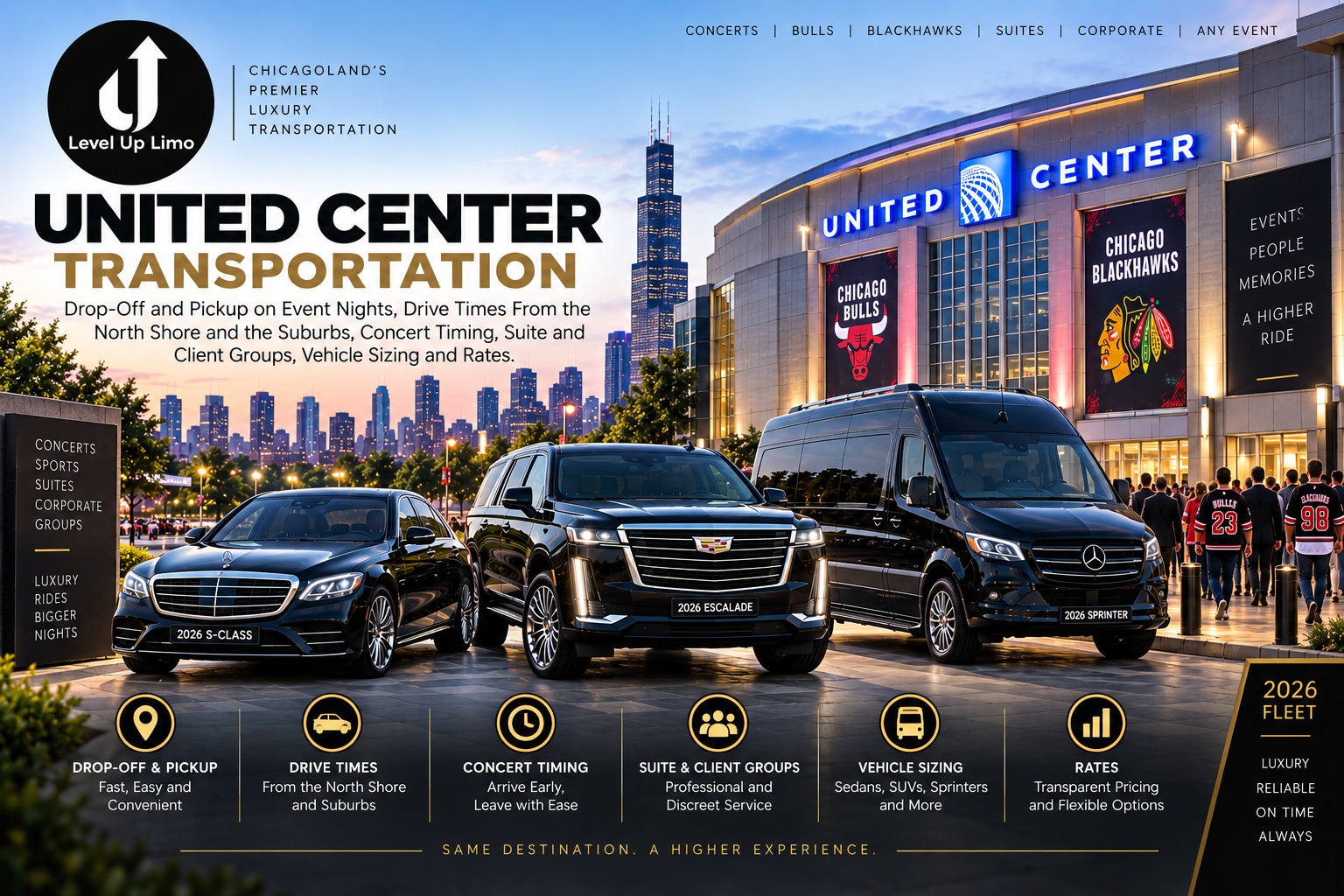
United Center Transportation: Game and Concert Night Drop-Off, Pickup and Drive Times
Written by the Level Up Limo team. Updated September 19, 2026. Quick answer: The United Center…
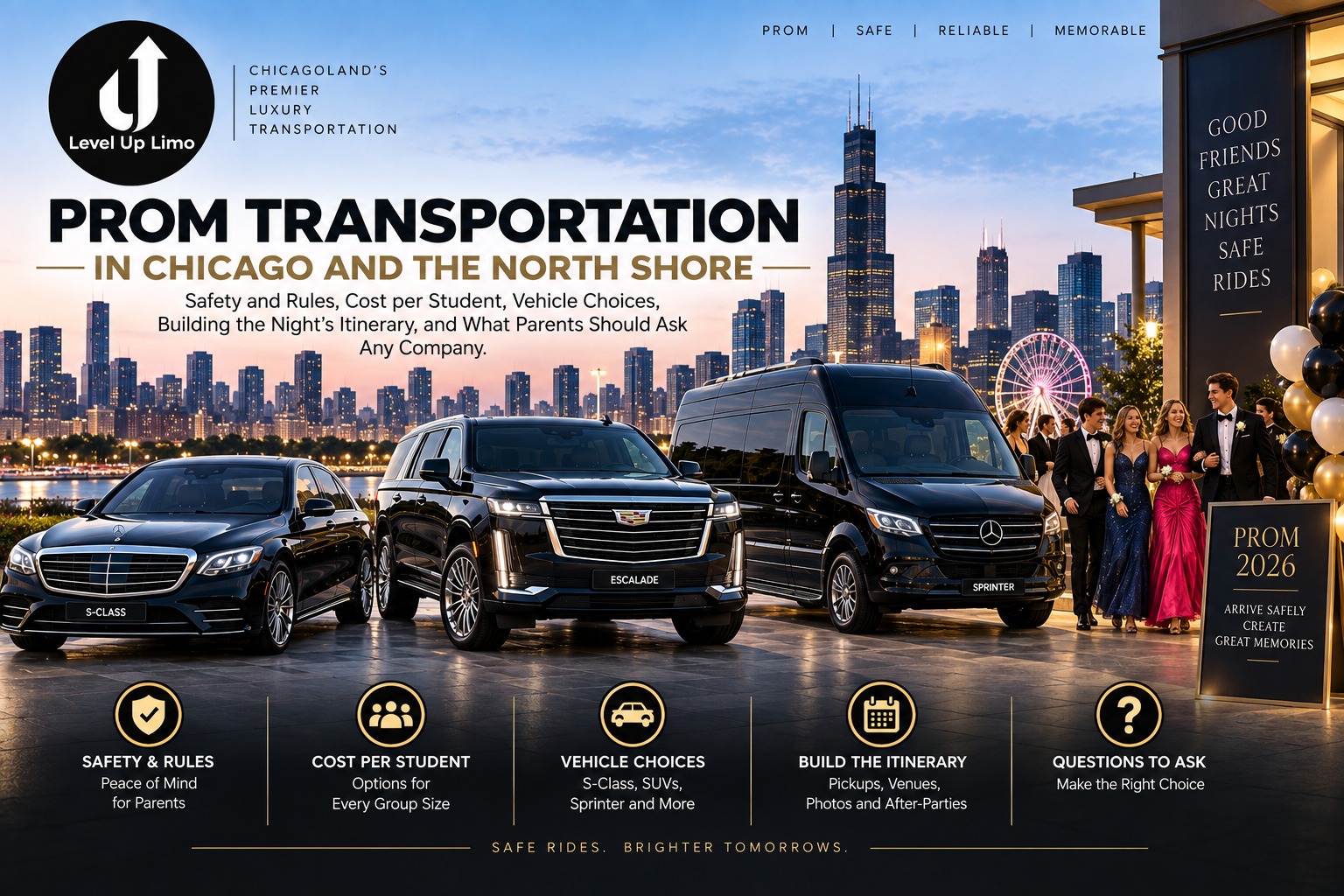
Chicago Prom Transportation: A Guide for Parents
Written by the Level Up Limo team. Updated September 19, 2026. Quick answer: For parents, prom…

Chicago Wedding Transportation: What It Costs and How Many Hours to Book
Written by the Level Up Limo team. Updated September 19, 2026. Quick answer: Wedding transportation in…
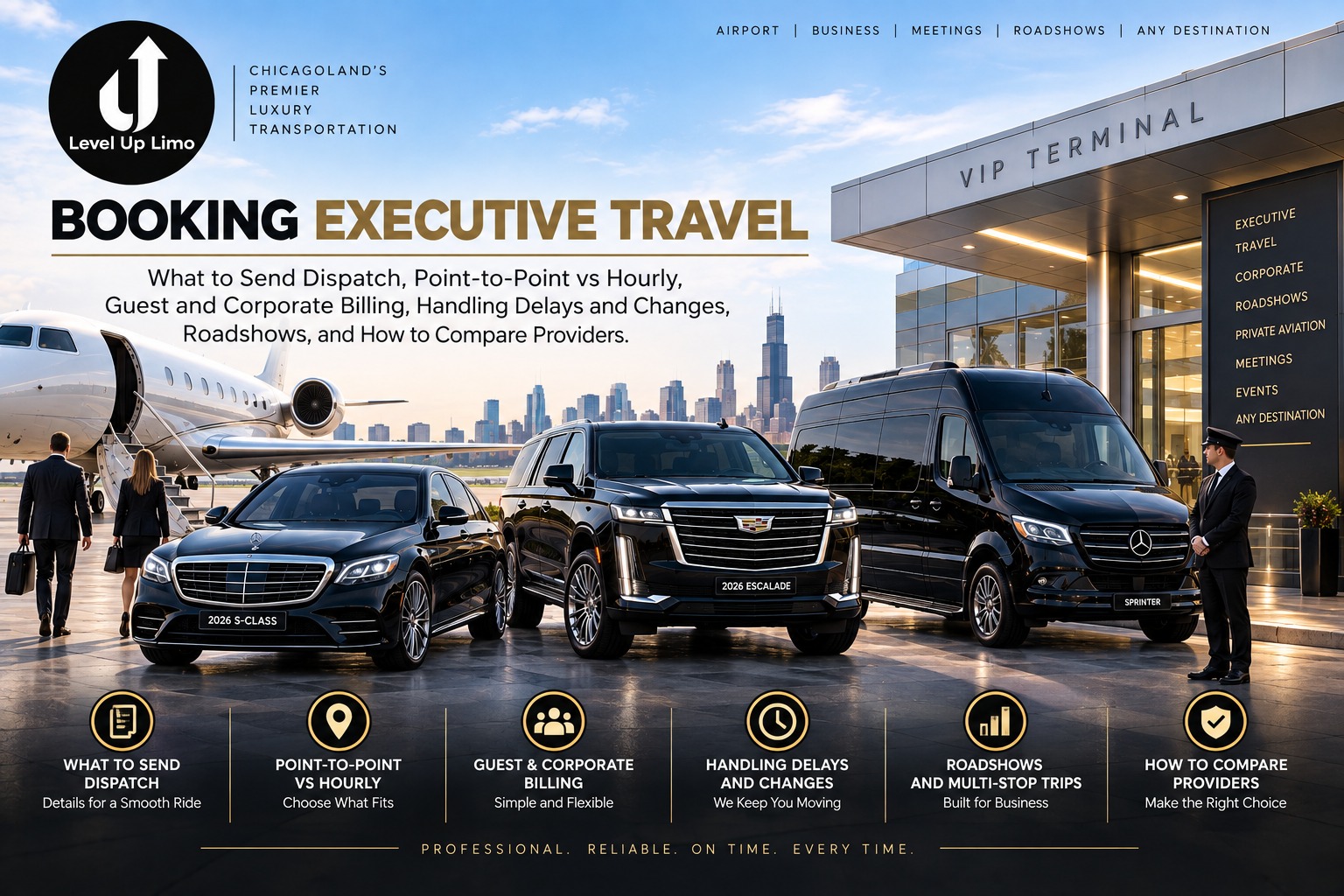
Booking Executive Travel: A Guide for Executive Assistants
Written by the Level Up Limo team. Updated September 19, 2026. Quick answer: Booking travel for…

Chicago Golf Outing Transportation: Courses, Clubs and Corporate Days
Written by the Level Up Limo team. Updated September 19, 2026. Quick answer: Soldier Field sits…

Northbrook to O’Hare and Midway: Car Service, Drive Times and Flat Rates Both Ways
Northbrook to O’Hare and Midway Car Service, Both Ways, 24/7: Drive Times, Flat Rates, Pickup…
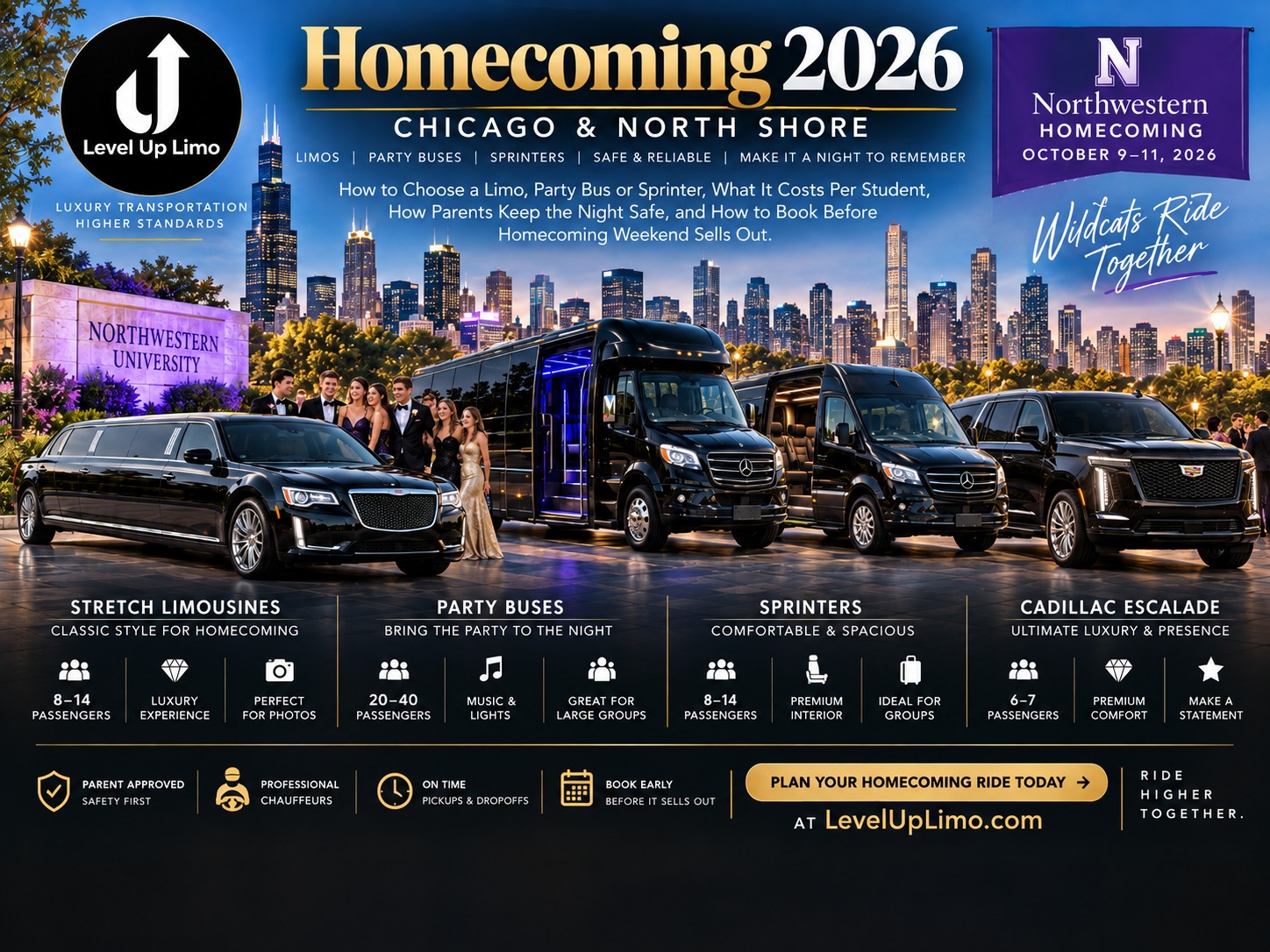
Homecoming 2026 Transportation for Chicago and North Shore Students
Homecoming 2026 Transportation for Chicago and North Shore Students: How to Choose a Limo, Party…
Stretch Limo vs. Party Bus vs. Sprinter in Chicago
Stretch Limo vs. Party Bus vs. Sprinter in Chicago: Capacity, Comfort, Cost and the Best…
How to Plan a Limo Ride in Chicago
How to Plan a Limo Ride in Chicago: Choosing the Right Vehicle, Booking at the…
The Chicago Casino Limo & Car Service Guide
The Chicago Casino Limo & Car Service Guide: Rivers, Grand Victoria, Joliet, Wind Creek, Bally’s,…
The Chicago Hotel Car Service, Resorts & Casinos Limo Guide
The Chicago Hotels, Resorts & Casinos Car Service Guide: O’Hare & Midway Pickups, Drop-Offs &…
Chicago Limo Service Guide
Chicago Limo Service: The Complete Guide to Rides, Rates, Airports & Booking Updated September 2026…

Wilmette to O’Hare & Midway Guide
Winnetka to O’Hare & Midway: The Complete Airport Car Service Guide Updated September 2026 ·…

Vernon Hills to O’Hare & Midway Guide
Vernon Hills to O’Hare & Midway: The Complete Airport Car Service Guide Updated September 2026…
Chicago University & Campus Transportation Guide
Chicago University & Campus Transportation: The Complete Guide Updated September 2026 · Written by the…
Evanston to O’Hare & Midway Guide
Evanston to O’Hare & Midway: The Complete Airport Car Service Guide Updated September 2026 ·…

Glenview to O’Hare & Midway guide
Glenview to O’Hare & Midway: The Complete Airport Car Service Guide Updated September 2026 ·…
Highland Park to O’Hare & Midway Guide
Highland Park to O’Hare & Midway: The Complete Airport Car Service Guide Updated September 2026…

Northbrook to O’Hare & Midway Guide
Northbrook to O’Hare & Midway: The Complete Airport Car Service Guide Updated September 2026 ·…

The Chicago Vacation Travel Guide: Flights, Hotels, Places to Go & the Chauffeured Upgrade
A Chicago vacation rewards the traveler who plans it in the right order: flight first,…

The McCormick Place & Convention Transportation Guide
The show floor is where deals happen. The ride is where they’re won or lost…

Early Morning Car Service to O’Hare & Midway
The first flight out belongs to the people who slept well the night before. Written…
The Lake Forest Limousine Guide
In a town where everything is understated and excellent, your ride should be both. Written…

Event Limo Guide: Lake Forest & the North Shore
Ravinia lawn nights, Deer Path Inn weddings, New Trier prom season, Botanic Garden galas —…

Chauffeur Service in Chicago and Worldwide
By the Level Up Limo operations team — the chauffeurs and dispatchers who run these…
O’Hare & Midway Airport Pickup Across Chicagoland
Premier Chicago Airport Pickup From O’Hare & Midway to Your Chicagoland Destination Updated August 12,…
Chicago Ground Transportation for Planners: Concierge & Agent Booking Guide
Written by the Level Up Limo Team Chicago ground transportation for planners begins long before…

North Shore Wedding Transportation: 5 Venue Pickup Plans
Written by the Level Up Limo Team North Shore wedding transportation should reflect the venue,…
Notre Dame Sporting Event Limousine & Luxury Transportation: Beyond Football
Written by the Level Up Limo Team Notre Dame sporting event limousine planning should not…
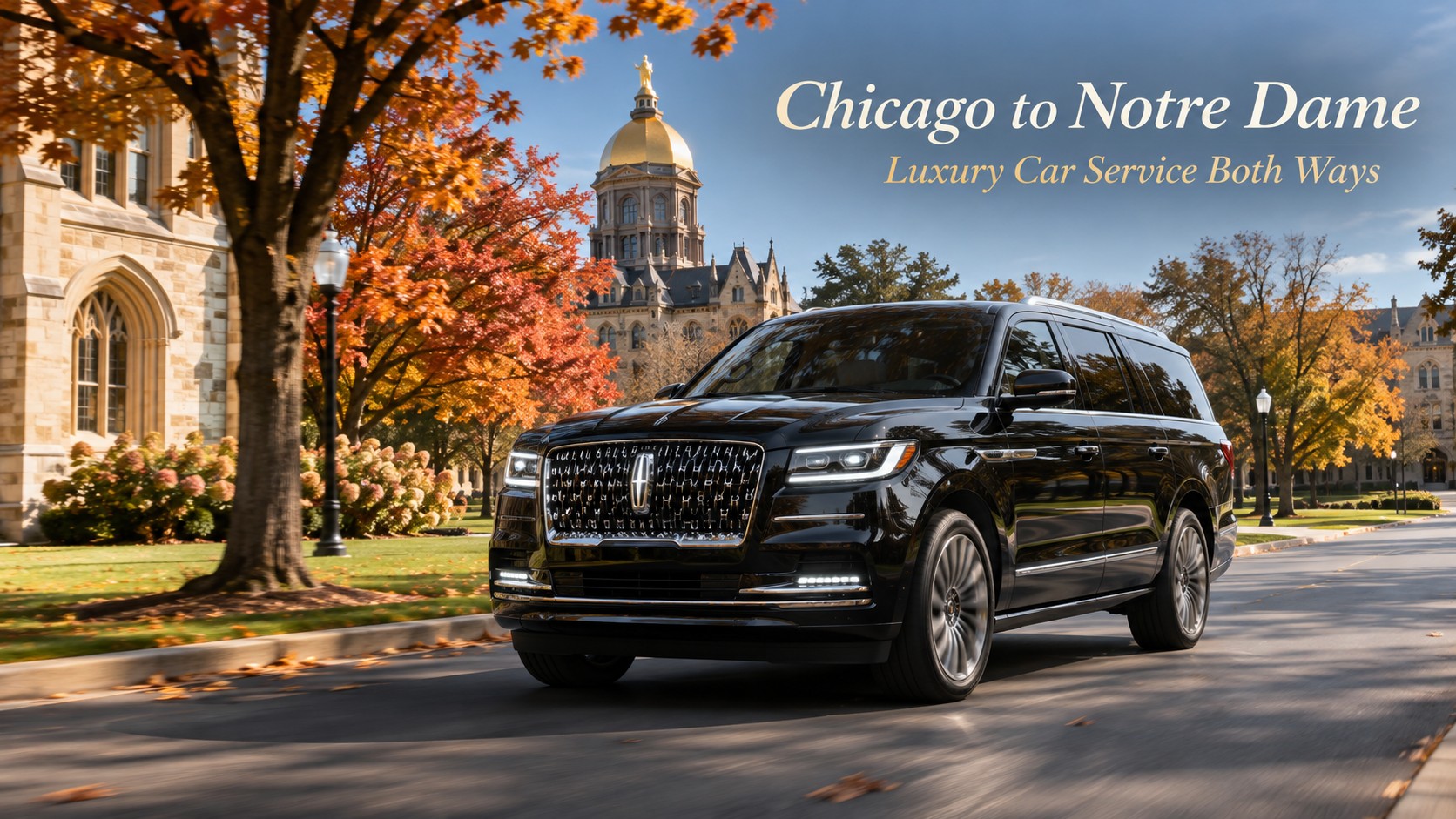
Chicago to Notre Dame Limousine & Car Service Both Ways: Campus Trip Guide
Written by the Level Up Limo Team Chicago to Notre Dame limousine and car service…
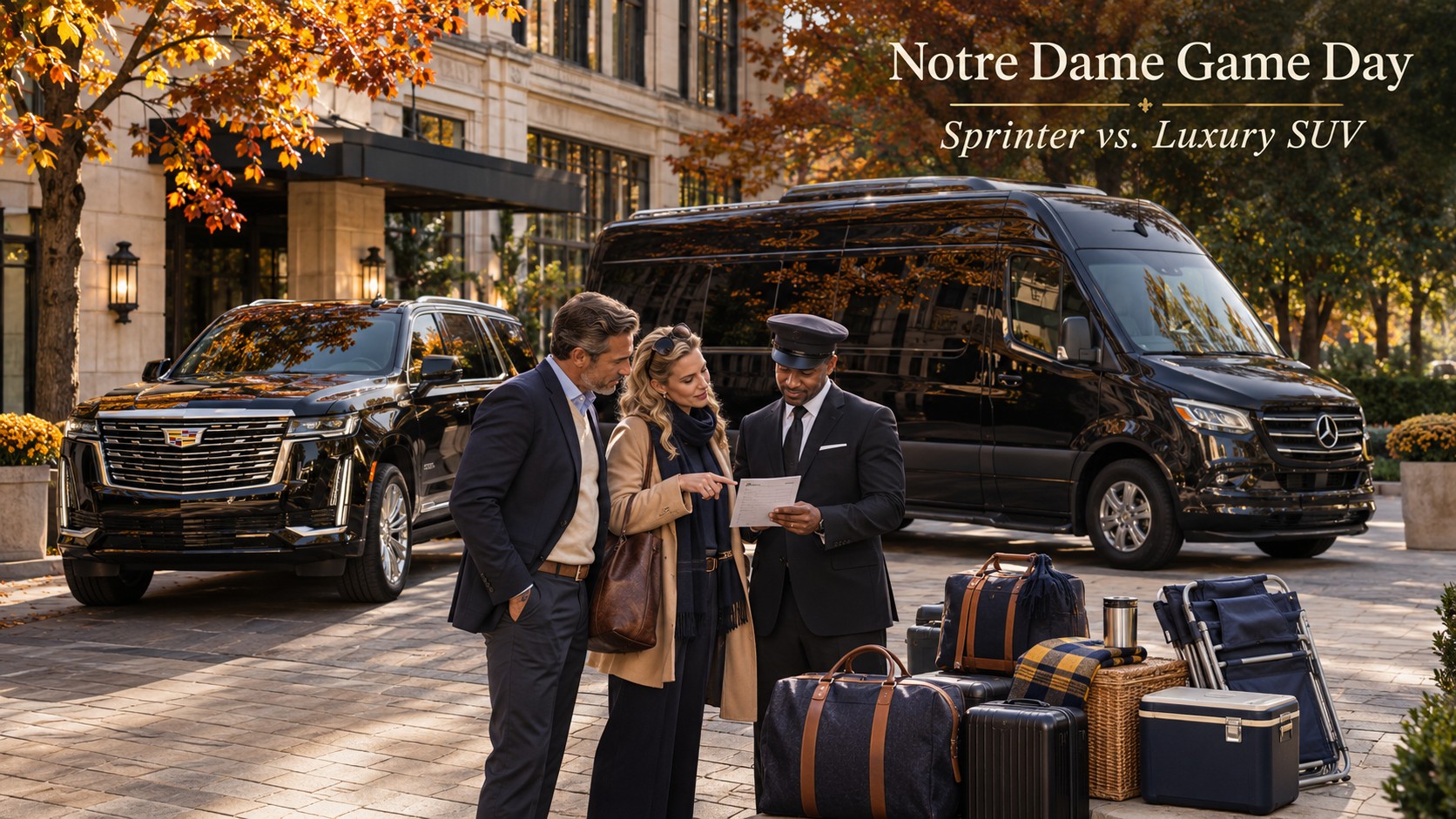
Notre Dame Game Day Sprinter Rentals vs. Luxury SUVs: Group Size & Gear Guide
Written by the Level Up Limo Team Notre Dame game day Sprinter rentals are worth…
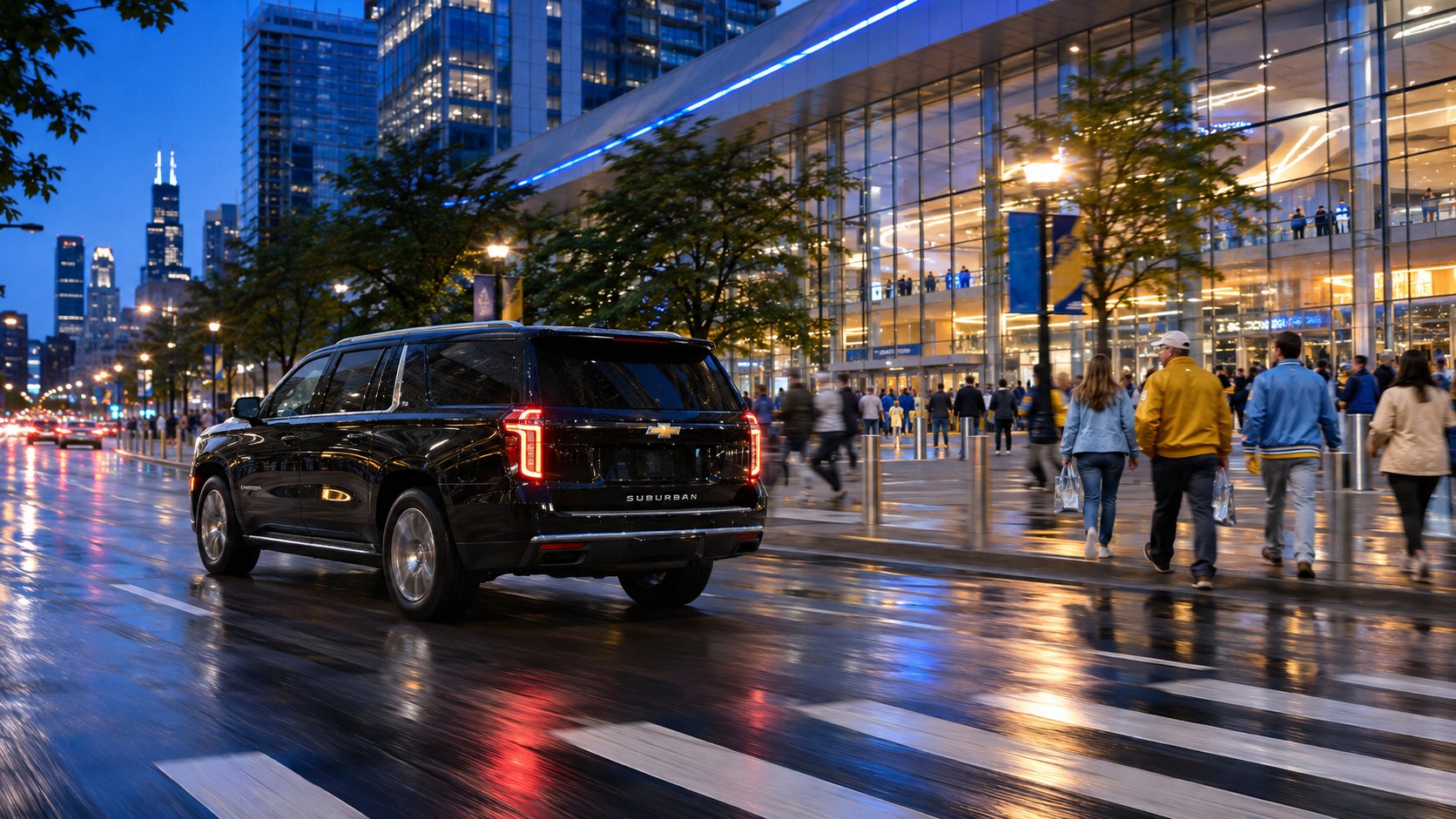
Chicago Sky Game Day Guide: The Wintrust Arena Fan Experience
Written by the Level Up Limo Team A Chicago Sky game day guide should begin…
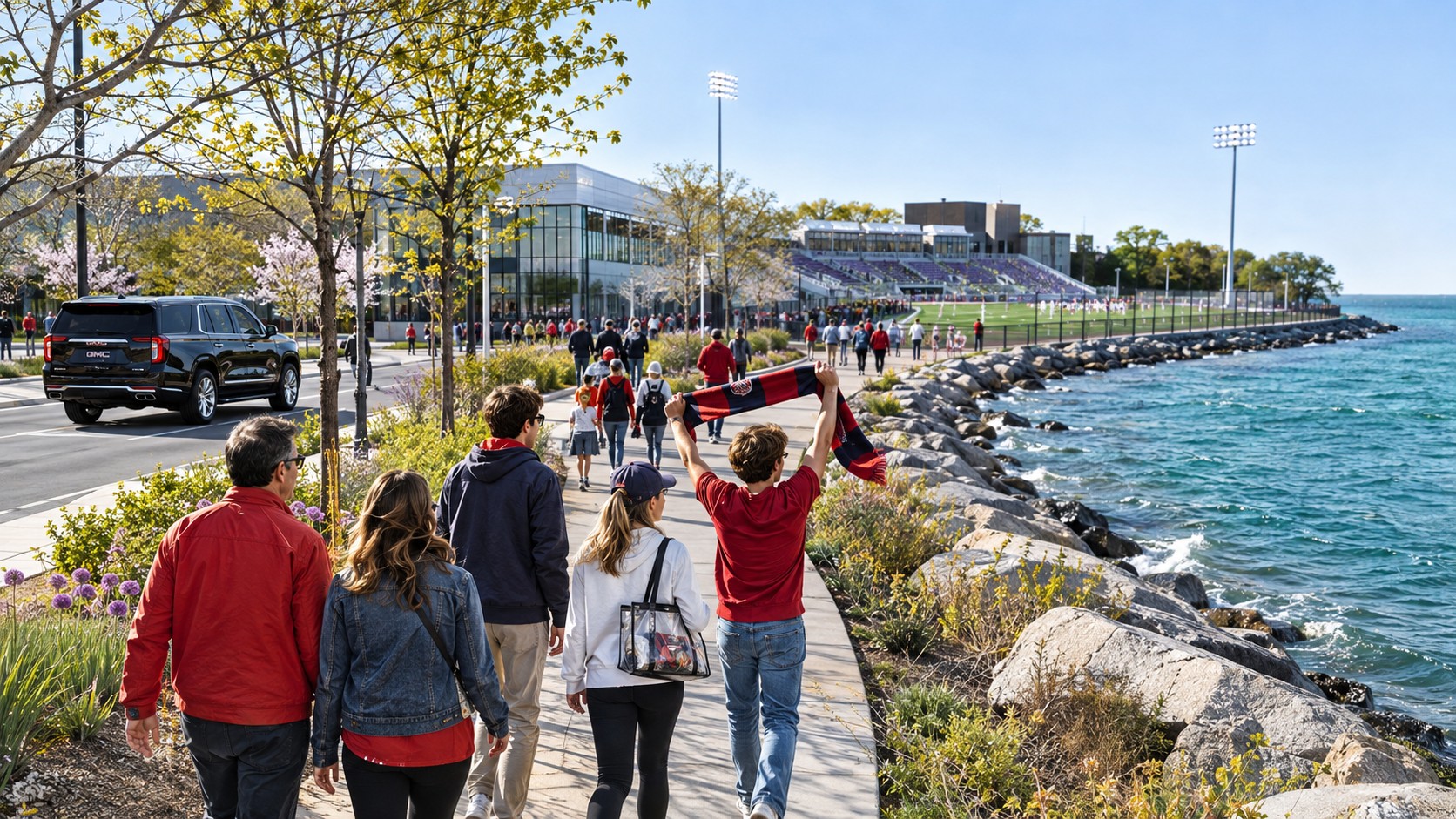
Chicago Stars FC Game Day Guide: Martin Stadium Parking & Pickups
Written by the Level Up Limo Team A Chicago Stars FC game day guide now…

Northwestern Basketball Game Day Guide: Welsh-Ryan Arena Parking & Pickup
Written by the Level Up Limo Team A Northwestern basketball game day guide begins at…

Bears vs Packers Christmas Day Transportation: Soldier Field Guide
Written by the Level Up Limo Team Bears vs Packers Christmas Day transportation deserves more…
Chicago Fire FC Game Day Transportation: SeatGeek Stadium Guide
Written by the Level Up Limo Team Chicago Fire FC game day transportation requires a…